Your cart is empty
Tax included and shipping calculated at checkout

Drawer menu
Tax included and shipping calculated at checkout

Everything we make begins as something that grew. Nothing we make is ever made twice.
Indian parents read every food label in the house. We check ingredients, we ask what is in things, we refuse what we do not recognise. And then we dress our children in petroleum.
Zouhi started from that gap — not from a trend or a marketing brief, but from a small workshop outside Kochi and a decision to use only fibres that came out of the ground.
Seven of them, as it turns out. Some are waste: pulp left over after juice or sugar is taken. Some are leaves that would otherwise be burnt. Each is woven into a cloth that does what cotton cannot — cool when it is hot, soft against new skin, biodegradable when its life is over.
From the workshop
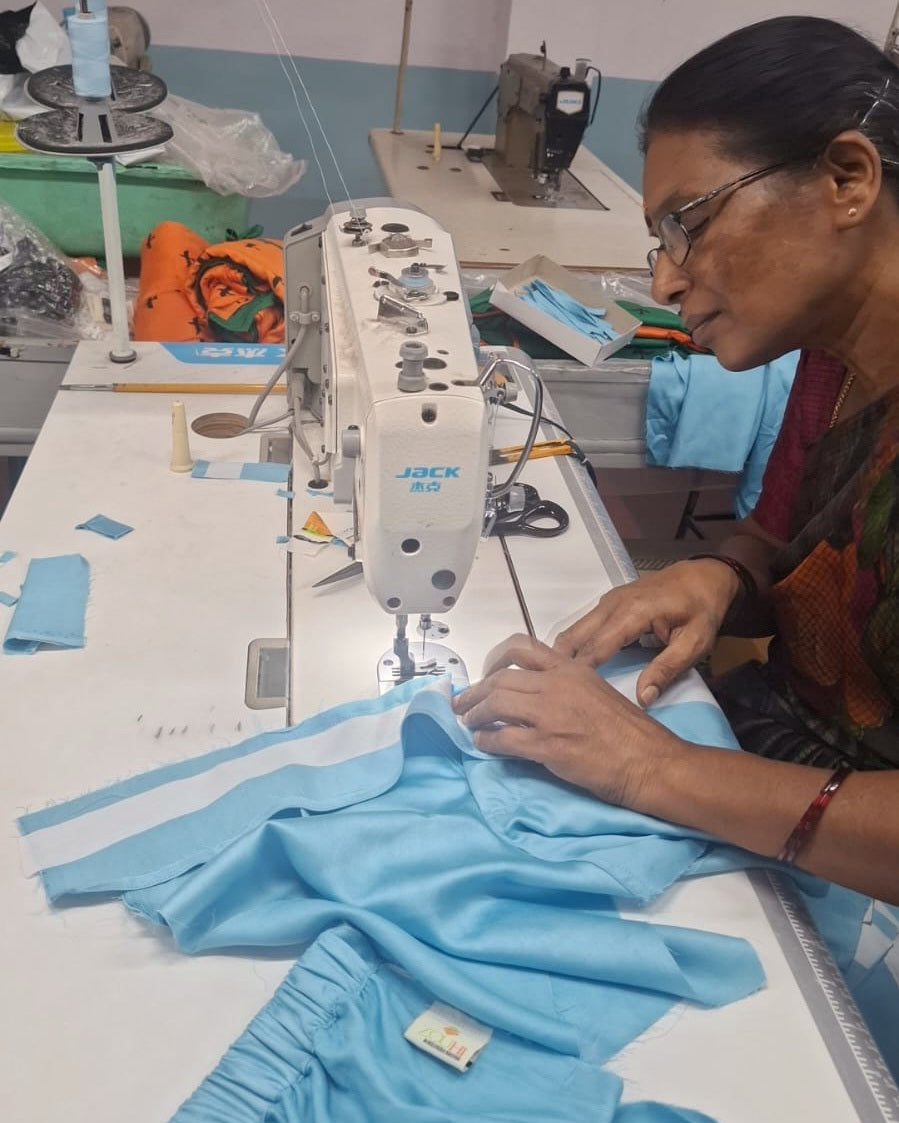
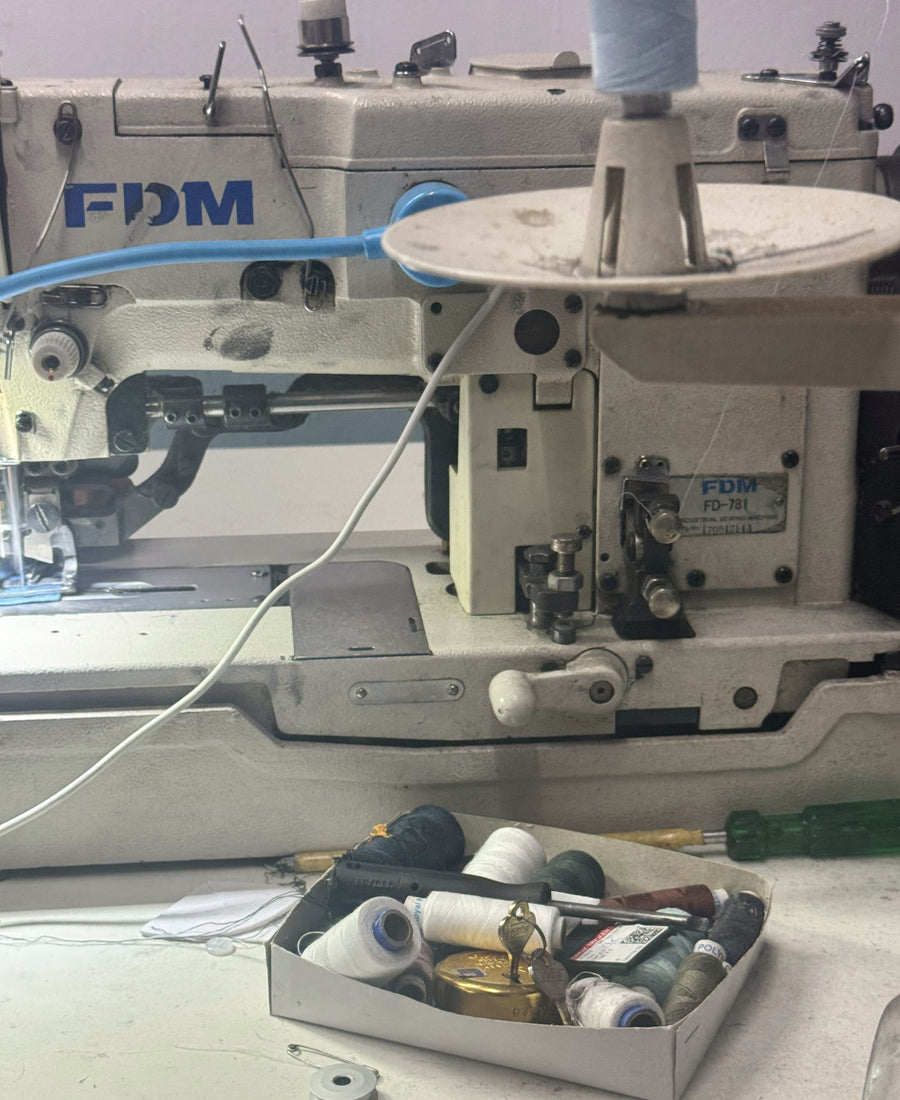
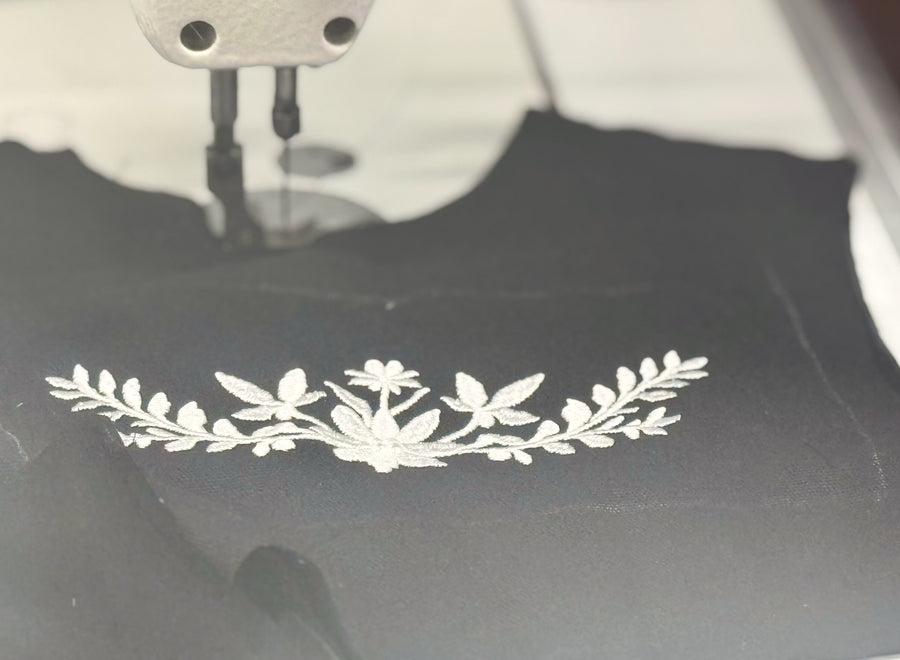
One room outside Kochi where everything is cut, sewn and finished. These are not campaign photographs — they were taken on a phone, on ordinary working days, and we would rather show you that than a version of it.
The seven
Mill by-product · Kerala & Tamil Nadu
After the sugar is taken, the stalk is left behind and most of it is burnt as agricultural waste. We buy the rest. Pulped, spun, woven into a cloth as cool as cotton and as soft as silk. It is the fibre we use most often, and the one we love most.
Mill by-product
Closed-loop pulp
Processed in a closed-loop system where almost all the solvent is recycled and used again. The thread that comes out is silk-like and biodegradable. In our hands it becomes the lighter pieces — the ones meant for warm afternoons.
Closed loop
Field waste
Plant-based, naturally hypoallergenic, and silk-like to the touch. Gentle enough for the most sensitive skin. It is the fibre behind our Little Maharaja Set and the Yellow Golden Blossom Frock.
Hypoallergenic
Leaf · Philippines & Kerala
After the pineapple is harvested the leaves are usually burnt or left to rot. They contain a long, fine fibre — the same one used for centuries in the Philippines to make piña cloth. Processed into modern Piñatex it is durable, supple, entirely plant-based. It is not in a piece yet, and we will not pretend otherwise.
Not yet in a piece
Managed groves
Not bamboo as it grows, but bamboo gently broken down and re-spun into a thread that drapes like silk. Naturally antibacterial, with nothing applied afterwards. It is the fibre in our Maroon Elegance Pattu, and what we reach for when a piece needs to fall, not stand.
Antibacterial
Juice press · waste pulp
Orange juice is pressed worldwide by the millions of litres, and the pulp left over is mostly waste. A small handful of mills have learnt how to spin it into a thread. It is one of the rarest things we work with — soft, breathable, almost weightless — and the only fibre in the house permitted a colour of its own.
Citrus · reserved
Temple flowers, after offerings
Yes, really. Flowers that would usually be composted or given to the river. A small process, still being refined, can spin them into a thread. We are early in our work with this fibre. Nothing carries it yet. You will see it first in something small.
In development
Verified by others
Four independent bodies test and audit what we make. Each certifies something different, and none of them certifies everything — so we have set out below exactly what each one covers, and which pieces it covers.

Cotton pieces only · organic fibre and every processing stage
The most demanding standard we hold. It certifies that the cotton was grown organically, then audits every stage that follows — spinning, weaving, dyeing, finishing — against both environmental and social criteria. Snowdrop is cut from GOTS-certified organic cotton and is the only piece in the house to carry all four marks.
Every component · tested for harmful substances
The one that matters most on a child. Every component of a certified article — cloth, thread, tag, cord — is laboratory-tested against a list of substances harmful to human health. The limits for garments worn next to a baby's skin are the strictest the standard sets.
Traceable · where and by whom it was made
Awarded only where STANDARD 100 is already held and the facilities themselves have been audited for environmental practice and working conditions. Each labelled garment carries a unique product ID: enter it on the OEKO-TEX site and you are shown the countries and production stages your piece passed through.
Cotton pieces only · farm practice
A field-level programme covering water use, soil health, pesticide reduction and the wellbeing of farming communities. It applies to cotton and to nothing else — so you will see it on Snowdrop, and not on a piece cut from eucalyptus, bamboo silk, sugar cane, corn or orange fibre.
Certification marks are the property of their issuing bodies and are shown in their official colours. You will not see the Global Recycled Standard here: it certifies recycled content, and our cloth is spun from virgin plant fibre, so it does not apply to anything we make.
The numbered edition
01
The number comes before the first stitch
Before a pattern is cut we decide how many of that piece will ever be made. It depends on the cloth we could get and how long the finishing takes — never on how well it might sell.
02
Each piece is numbered by hand
A cotton tag is sewn into the side seam and the number written on it by the finisher who completed the piece.
03
When the last is sent, the design retires
We do not restock. We do not reissue it in another colour the following season. The pattern goes into a drawer and stays there.
04
The price never moves
The price on the first number is the price on the last. We do not run sales, and we have never marked a piece down.
What we do not do